Edmond Saade Built TeamUp Because He Was Tired of Working Out Alone

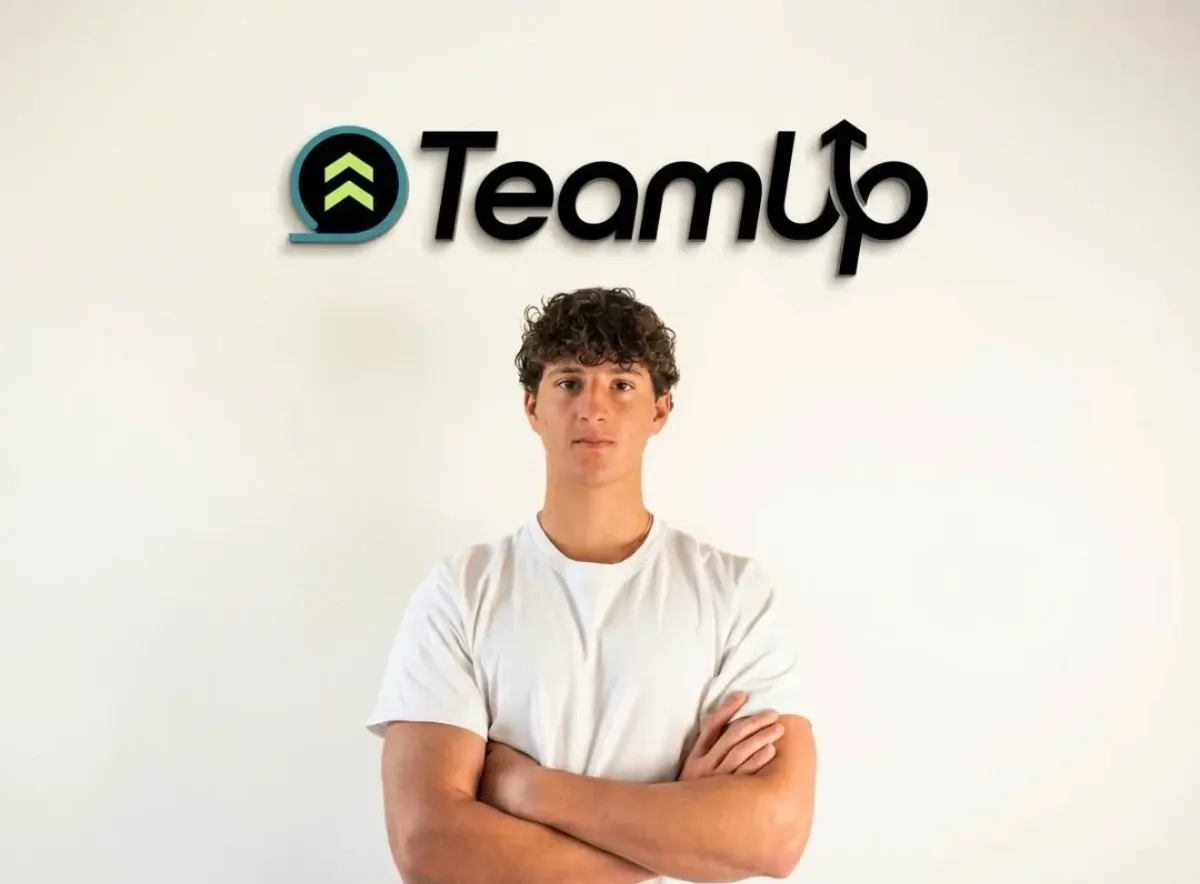
Most 19-year-olds complaining about problems scroll through solutions on their phones. Edmond Saade built one instead. The Venezuelan-born founder launched TeamUp from a frustration every college athlete recognizes: wanting to play sports but having no reliable way to find partners who match your schedule, skill level, and commitment. While classmates accepted this friction as inevitable cost of adult life, Saade saw it as solvable engineering problem. His solution wasn't another passive social network where people talk about fitness—it's active infrastructure making it effortless to actually move.
TeamUp's core insight is deceptively simple: the friction preventing physical activity isn't motivation, it's coordination. People want to play tennis, join pickup basketball, hit the gym with a partner. What stops them is the awkward group text that goes unanswered, the scheduling chaos across friend groups, the uncertainty about whether anyone will actually show up. Saade stripped that friction away by building matchmaking that works like dating apps but optimizes for athletic compatibility instead of romance. Skill level, location, available times, preferred sports—the algorithm handles logistics that traditionally required dozens of texts and usually ended with someone working out alone anyway.
The competitive leaderboard feature reveals understanding of what actually drives behavior change. Saade isn't naive about human psychology—he knows the same dopamine mechanisms that make social media addictive can be redirected toward healthy outcomes. By letting users log match results and track performance against friends, TeamUp creates accountability loops that make consistency rewarding. You're not just playing tennis; you're climbing a leaderboard. You're not skipping the gym; you're breaking a streak. The gamification isn't superficial decoration—it's behavioral architecture designed to make physical activity as habitual as checking Instagram.
The Art Basel Miami activation demonstrated ambitions beyond simple fitness app. By curating an event bringing together creators, executives, and streamers around active living, Saade positioned TeamUp at intersection of culture, technology, and wellness. The event wasn't product launch—it was cultural statement that fitness belongs in the same aspirational context as art, fashion, and innovation. This branding matters for reaching Gen Z, who increasingly reject the meathead gym culture and corporate wellness programs that dominated previous generations. Saade is reframing active living as creative, social, and culturally relevant rather than disciplinary self-improvement.
His "stop scrolling, start sweating" mantra captures the philosophical core better than most mission statements ever could. TeamUp exists because Saade believes technology's highest purpose is facilitating real-world connection, not replacing it. Every feature is designed to get people off the app and onto courts, fields, and gyms where actual relationships form. Success metrics aren't daily active users or engagement time—they're matches played, friendships formed, and habits built. It's rare conviction in an industry that typically measures success by how much attention it captures rather than how much value it creates.
The platform's expansion trajectory suggests Saade understands product-market fit intuitively. Starting with university students and young professionals makes sense—these demographics face the exact coordination problems TeamUp solves while having density necessary for network effects to work. As the user base grows in initial markets, the value proposition strengthens because more potential partners become available. This isn't complicated marketplace dynamics, but many founders miss it by trying to scale too quickly before achieving critical mass anywhere.
What makes Edmond Saade's approach credible is that he's building for himself. He's not Silicon Valley veteran extracting insights from user research—he's the frustrated college student who couldn't find consistent workout partners. That proximity to the problem shows in every product decision. The features exist because he needed them. The user experience reflects his own usage patterns. The cultural positioning matches his peer group's values. This authenticity resonates in ways that market-researched solutions never quite capture.
TeamUp represents broader shift in how young founders think about technology's role in society. While previous generations built platforms maximizing engagement regardless of downstream effects, Saade's cohort increasingly builds tools solving problems they experience personally. The result is products that feel less like attention-extracting machines and more like genuine utilities improving daily life. If TeamUp succeeds at scale, it won't be because Saade hacked engagement metrics—it'll be because he solved coordination problems preventing people from doing what they already wanted to do.